


In the world of laptops, choosing the right brand can feel like picking a favorite child—everyone’s got an opinion, and it’s never easy. With an overwhelming number of options, it’s crucial to sift through the noise and find the perfect match for your needs. Whether you’re a gamer, a student, or just someone who loves binge-watching cat videos, the right laptop can make all the difference.
This article dives into the nitty-gritty of brand comparisons, highlighting the pros and cons of each major player in the laptop arena. From sleek designs to performance powerhouses, he’ll break down what each brand brings to the table. So grab your favorite snack, sit back, and get ready to discover which laptop brand will be your new best friend—or at least your most reliable work buddy.
Overview of Brand Comparison Laptops
Numerous laptop brands exist, each offering unique features and specifications. Major players like Dell, HP, Apple, Lenovo, and Asus compete vigorously in various segments. Comparative analysis reveals strengths and weaknesses within each brand, helping consumers navigate options.
Dell laptops typically excel in build quality and customer support. Their XPS series gains popularity for premium display and performance. HP often provides a wide range of laptops that cater to budget-conscious users. The Pavilion and Envy series demonstrate reliable performance for everyday tasks.
Apple stands out with its MacBook line for users prioritizing design and ecosystem integration. macOS enhances user experience, particularly for creative professionals. Lenovo frequently appeals to business users with its ThinkPad series, offering durability and extensive keyboard comfort. Gamers might choose Asus due to its ROG line, which focuses on high-performance gaming capabilities.
Performance metrics vary significantly among brands. Many laptops focus on lightweight designs for portability, whereas others prioritize graphics performance. Battery life also differs across models, influencing user satisfaction greatly.
Comparing warranty options provides additional insight into brand reliability. Dell and Apple have strong support networks that cover significant issues. Lenovo and Asus also maintain customer support, though experiences vary.
By examining specific models, individuals find the best laptop tailored to their needs. Evaluating brand reputation further assists in making informed decisions. The selection process becomes simpler when individuals consider all available information.
Major Laptop Brands
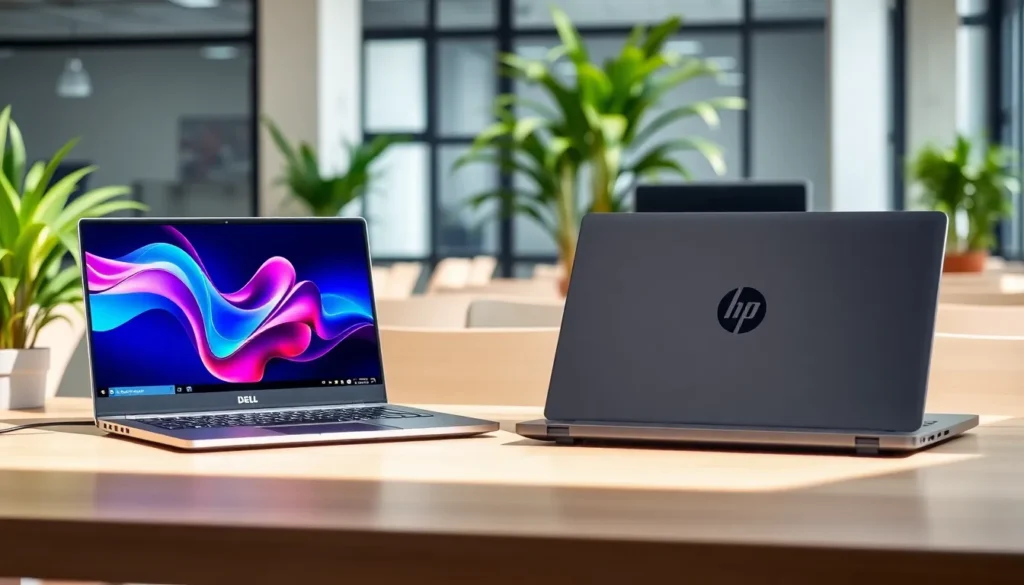
Choosing the right laptop brand can greatly influence user experience. Here’s an overview of key brands, their offerings, and specifications.
Dell: Features and Specifications
Dell stands out for its exceptional build quality and customer support. The XPS series, known for stunning displays and premium materials, appeals to professionals and creatives alike. Dell laptops often feature powerful processors, ample storage options, and customizable configurations. They prioritize performance and reliability, making them a top choice for business and gaming users. With various connectivity options, including USB-C and HDMI, these laptops accommodate diverse user needs.
HP: Features and Specifications
HP provides a versatile lineup of laptops that caters to different budgets. The Pavilion series offers reliable performance at an affordable price point, attracting students and casual users. HP often integrates solid-state drives for faster boot times and overall efficiency. Key models come with touchscreens and sleek designs to enhance usability. Additionally, support for a range of applications ensures compatibility with various user requirements.
Apple: Features and Specifications
Apple’s MacBook line is renowned for its elegant design and seamless ecosystem integration. Features include Retina displays, which deliver stunning visuals, appealing to creative professionals. MacBooks often run on macOS, providing optimized performance for software like Final Cut Pro and Logic Pro. Battery life frequently exceeds that of competitors, offering extended usage for users on the go. Moreover, the strong customer support network bolsters user confidence in Apple’s products.
Performance Evaluation
Performance evaluation highlights how different brands cater to specific user needs. Variations exist in processing power, graphics performance, and user satisfaction across models.
Benchmarking Tests
Benchmarking tests facilitate direct comparisons among laptop brands. For instance, Dell’s XPS series consistently scores high in CPU performance, making it ideal for demanding tasks. Apple’s MacBook models excel in multi-core processing, advantageous for creative software. Lenovo’s ThinkPad series showcases reliability in business applications, while Asus’s ROG line dominates gaming benchmarks with superior graphics rendering. These tests illuminate which brands lead in particular performance metrics and reveal strengths tailored to various user intentions.
User Experience
User experience encompasses design, ease of use, and customer support. Dell users often cite excellent customer service as a notable advantage. HP models attract attention for their intuitive interfaces and vibrant displays. Many creative professionals prefer Apple products due to their seamless integration with macOS, enhancing productivity. Lenovo’s ThinkPad series is cherished for its robust keyboards, ideal for typing-intensive tasks. Gamers frequently choose Asus for its customizable settings and high-refresh-rate displays, ensuring smooth gameplay. These factors significantly influence satisfaction ratings among users, highlighting the importance of selecting a brand that aligns with individual priorities.
Price vs. Value Analysis
Price plays a crucial role in determining the value of a laptop. Various brands, like Dell and HP, target different segments, influencing pricing strategies. Dell’s XPS series, known for its premium build quality, typically commands higher prices due to advanced features and performance. HP’s Pavilion line offers budget-friendly options that maintain quality while accommodating cost-conscious users.
Value encompasses more than just pricing. Performance, design, and support contribute to overall value perception. For instance, Apple’s MacBook models justify their higher costs with exceptional design, optimized performance, and a seamless user experience within macOS. Lenovo’s ThinkPad series emphasizes durability and reliability, appealing to business professionals who prioritize long-term investments over initial costs.
Analyzing features against price reveals essential patterns. Asus’s ROG laptops attract gamers with high-performance specifications, validating premium prices through gaming capabilities and customizable settings. Meanwhile, affordable laptops from HP provide adequate performance for casual users without breaking the bank.
Customer support also factors into value analysis. Dell and Apple stand out for robust support networks, enhancing their laptops’ value through reliable service. Lenovo and Asus may lag in support consistency, impacting overall user satisfaction.
Recent data underscores that while price differences exist, value often aligns with user needs. Business users may prioritize durability and customer support, while gamers seek high performance and customization features. Ultimately, understanding the relationship between price and value aids individuals in selecting the ideal laptop brand tailored to their specific requirements.
Choosing the right laptop brand involves careful consideration of individual needs and preferences. With a variety of options available each brand offers unique features that cater to different users. Whether it’s Dell’s reliability or Apple’s seamless integration there’s a brand suited for every requirement.
Understanding the balance between performance price and value is crucial. By evaluating strengths and weaknesses along with user experiences individuals can make informed decisions. Ultimately the right laptop can enhance productivity and enjoyment making the selection process worthwhile.


